Search
Spend enough time around large technology initiatives and a pattern begins to emerge.
Two organizations can adopt the same platform, work with capable implementation teams and invest similar amounts of money. Yet a few years later their outcomes look very different. One organization moves faster, makes better decisions and continues improving its systems over time. The other struggles to capture value from the same technology.
At first glance, it is easy to assume the difference must be the software. Perhaps one organization selected a better platform or had stronger technical talent during implementation. But over time a different explanation usually becomes clear.
The difference is rarely the technology itself.
Enterprise technology has improved dramatically over the past decade. Cloud platforms are mature, enterprise data environments are powerful and artificial intelligence capabilities are advancing at an extraordinary pace. Organizations today have access to tools that would have seemed remarkable only a few years ago.
And yet, the outcomes from technology transformation have not improved at the same rate.
Research reflects this dynamic. Studies from McKinsey & Company have consistently found that roughly 70% of digital transformations fail to achieve their intended outcomes. Despite significant advances in technology, the success rate has remained stubbornly consistent.
That statistic tells us something important.
If the tools are improving but the outcomes are not, the constraint is probably not the technology.
More often, the constraint is the system surrounding it.
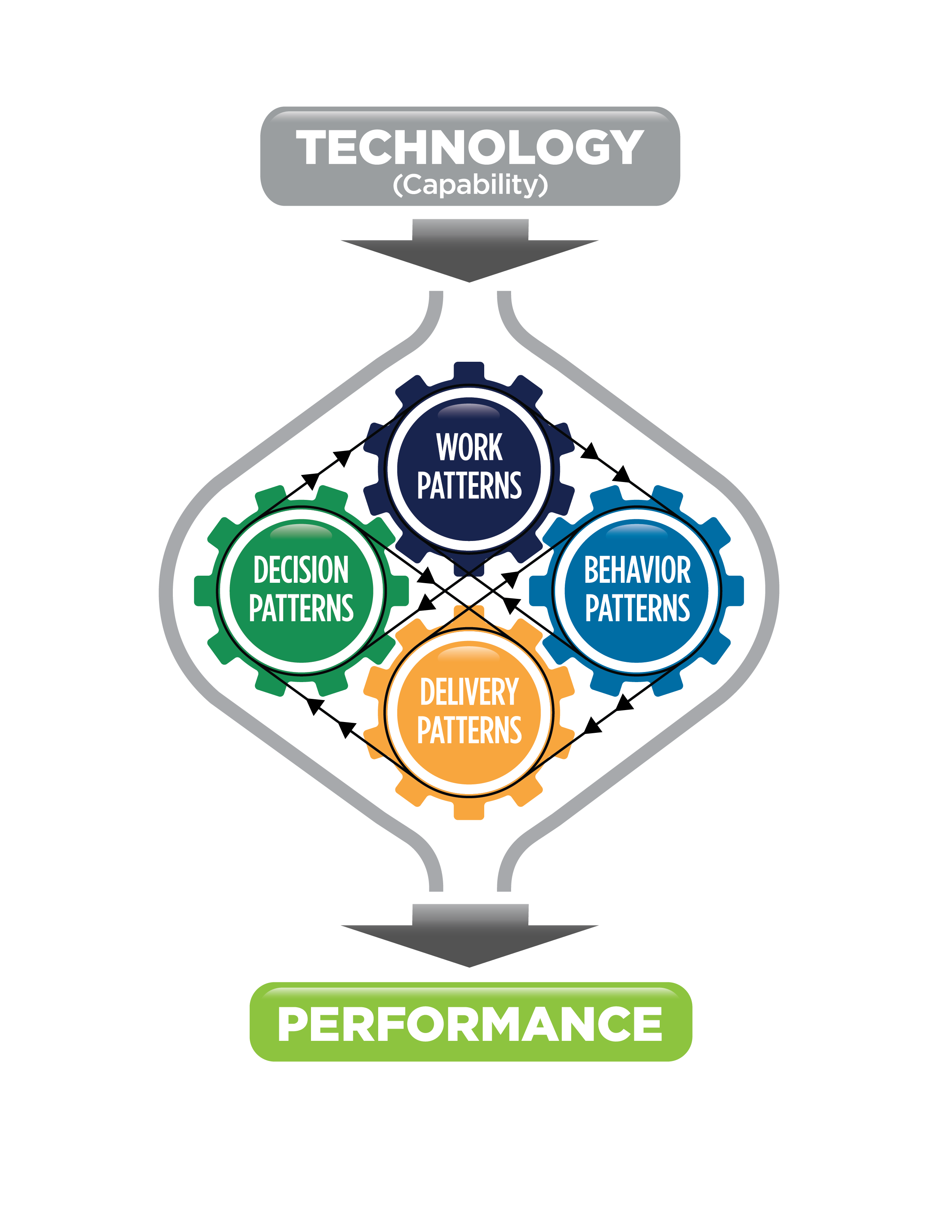
Technology introduces new capabilities into an organization. But performance ultimately emerges from patterns: how decisions move, how work flows and how incentives shape behavior. These patterns determine how effectively organizations operate day to day.
In many technology programs I’ve observed, new platforms are introduced but the surrounding system remains largely unchanged. Decision paths stay the same. Processes continue to follow familiar routines. Over time the organization quietly defaults back to the way it has always worked.
Eventually leaders may conclude that the technology failed. In reality the system around the technology never changed.
This is not a new idea. Decades ago, quality pioneer W. Edwards Deming argued that outcomes are produced by systems rather than individual effort. In modern technology organizations that insight remains remarkably relevant.
Technology expands what is possible. But the systems inside an organization determine what actually happens.
The organizations that consistently benefit from new technology recognize this dynamic. They focus not only on selecting the right tools but also on designing the operating conditions that allow those tools to succeed.
They design what I think of as patterns of performance.