Search
In leadership meetings, the same debate keeps coming up: Who owns AI? IT? A Chief AI Officer? The business? A better answer is that one enterprise AI leader should be ultimately accountable, but never solely responsible.
AI needs shared capability and clear accountability
AI is an enterprise capability, not a single-person function. Executive leadership sets direction. The enterprise AI leader aligns the organization and makes progress visible. Technology, data, governance, and risk enable and safeguard the work. Business and process owners apply AI, drive adoption, and own the outcomes.
Accountability flows down. Value and insight flow up.
For every AI initiative, the model should make three things clear:
- Business and process owners own the problem, adoption, and measurable result.
- Technology, data, governance, and risk enable and safeguard execution.
- Results are measured where work happens, then tracked upward to inform enterprise direction.
Without business ownership, pilots stay pilots. The enterprise AI leader creates alignment and visibility, but value is realized in the business and reported upward so leadership can see capability, progress, and impact.
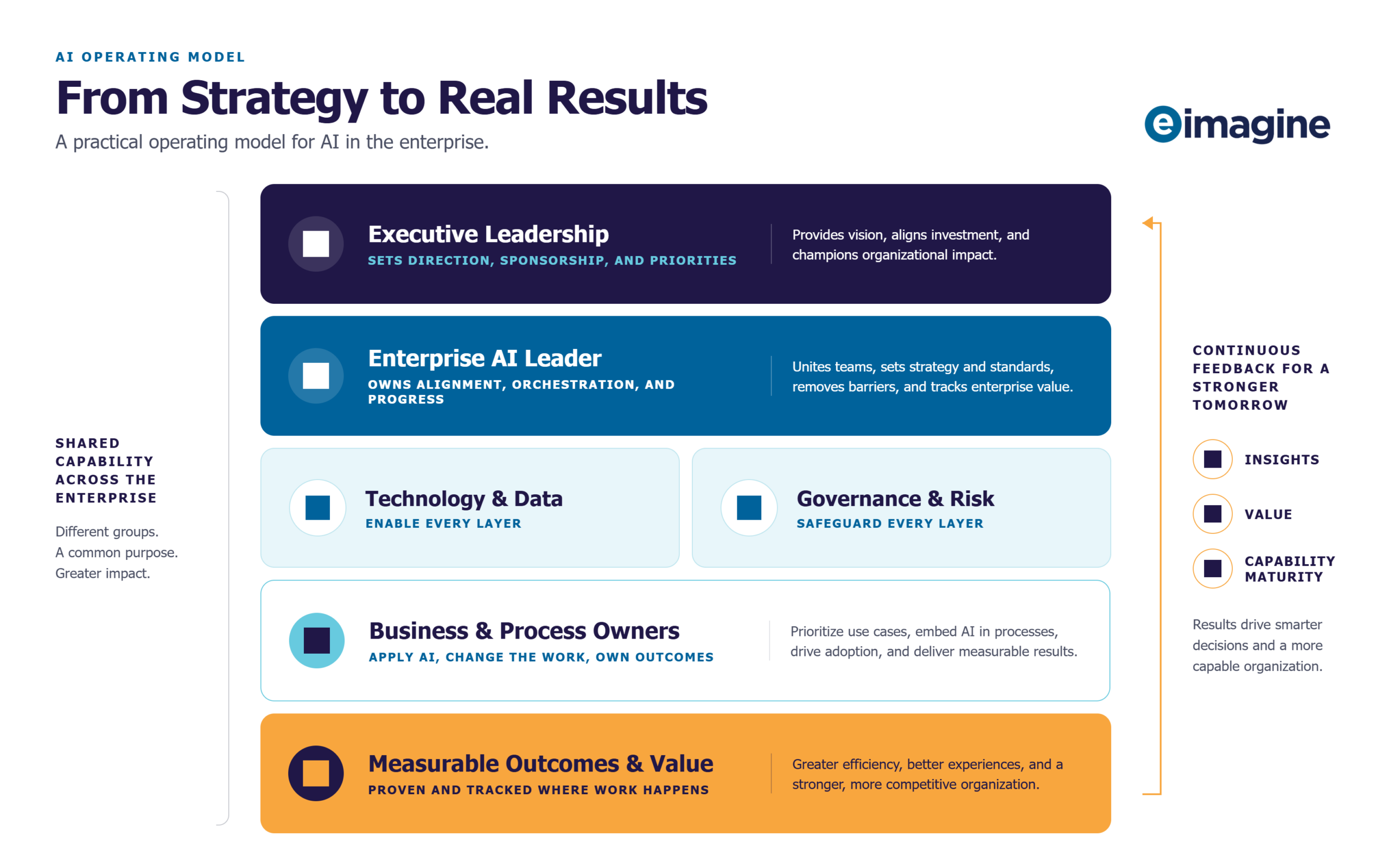
The model is connected: leadership signals direction, enterprise AI orchestrates, enabling teams support, business owners deliver, and measured value flows back up to guide what comes next.